
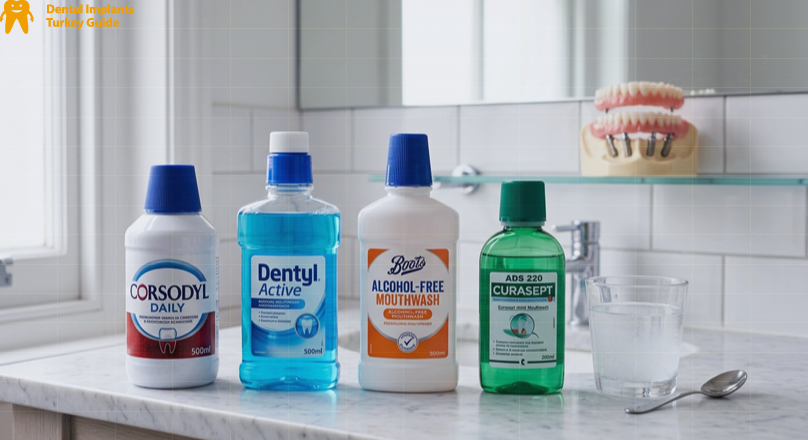
If you have dental implants whether placed in Turkey or in England, choosing the right mouthwash can impact your overall implant health. Some mouthwashes protect gums and prevent peri-implantitis (Dental Implant Failure and Infection). Others can damage implant surfaces or irritate surrounding tissue. This guide reviews mouthwash brands available in United Kingdom, explains which ingredients to look for and avoid, and answers common questions about Corsodyl, natural rinses, and whitening products.
Quick Answer: Alcohol-Free, Chlorhexidine (Short-Term Only), or Salt Water
For daily use, choose an alcohol-free, fluoride mouthwash without harsh chemicals – brands like Corsodyl Daily (alcohol-free), Dentyl Active (alcohol-free), or Boots own-brand alcohol-free mouthwash are safe for implants. For active gum disease (peri-implantitis), your dentist may prescribe chlorhexidine mouthwash (Corsodyl original or Curasept) – but use for 2 weeks only, not daily. Salt water rinses (homemade) are excellent for maintenance and post-surgery. Avoid whitening mouthwashes – they contain hydrogen peroxide that can damage zirconia bridges and irritate gums around implants.
Why Mouthwash Choice Matters for Dental Implants
Unlike natural teeth, implants have a titanium or zirconia surface and a delicate gum seal (peri-implant mucosa). Harsh ingredients can:
- Irritate the gum tissue, leading to inflammation and recession
- Damage the polished surface of zirconia or porcelain crowns (whitening agents)
- Disrupt the natural oral microbiome, allowing harmful bacteria to thrive
- Dry out mouth tissue (alcohol-based rinses), reducing natural antibacterial saliva
Choosing the wrong mouthwash will not directly cause implant failure, but it can contribute to peri-implantitis by irritating gums and allowing bacteria to accumulate. The right mouthwash supports gum health while being gentle on implant components.
Alcohol-Free vs Alcohol-Based Mouthwash for Implants
Avoid alcohol-based mouthwashes (e.g., Listerine Original, Boots own-brand original with alcohol): Alcohol dries out oral tissues, reducing saliva flow. Saliva is your mouth’s natural antibacterial defence mechanism. Chronic alcohol use is also a risk factor for oral cancer. Most UK implant specialists recommend alcohol-free mouthwash for implant patients.
Choose alcohol-free options: These clean without drying or irritating. Alcohol-free mouthwashes are gentler on peri-implant tissues and safe for daily long-term use.
Recommended alcohol-free brands in the UK:
- Corsodyl Daily (alcohol-free, antibacterial, cavity protection)
- Dentyl Active (alcohol-free, dual-action, comes in various flavours)
- Boots own-brand Alcohol-Free Mouthwash (fluoride-containing, very affordable)
- Superdrug own-brand Alcohol-Free Mouthwash
- Oral-B Pro-Expert (alcohol-free, less harsh than Listerine)
- Colgate Plax (alcohol-free, gentle formula)
- Listerine Alcohol-Free (newer formula – check label)
Which Alcohol-Free Mouthwashes Available at Boots Are Best for Dental Implants?
Boots UK stocks several alcohol-free mouthwashes that are safe for implants. Here are the top recommendations:
1. Corsodyl Daily (Alcohol-Free) – Best for peri-implantitis prevention
Contains: 0.05% sodium fluoride (cavity protection) + antibacterial agents
Why it is good: Gentle enough for daily use, reduces gum inflammation, alcohol-free. Available at most Boots stores (£4-£6).
2. Dentyl Active (Alcohol-Free) – Best for deep cleaning
Contains: Cetylpyridinium chloride (CPC) – antibacterial that kills bacteria associated with gum disease
Why it is good: The dual-action formula binds to plaque and bacteria, visible when you spit. Alcohol-free. Available at Boots (£5-£7).
3. Boots Alcohol-Free Fluoride Mouthwash – Best budget option
Contains: 0.05% sodium fluoride
Why it is good: Very affordable (£2-£3), alcohol-free, fluoride for cavity protection. Suitable for daily maintenance. No strong antibacterial agents – good for routine use when no active infection is present.
4. Oral-B Pro-Expert Alcohol-Free – Best for sensitive teeth and gums
Contains: Stannous fluoride (antibacterial + anti-cavity)
Why it is good: Less harsh than traditional Listerine, alcohol-free, provides gum protection. Available at Boots (£4-£6).
What to avoid at Boots: Listerine Original (contains alcohol – can dry gum tissue). Any product labelled “Whitening” or “Dual Action Whitening” (contains hydrogen peroxide – may damage zirconia).
Is It Safe to Use Corsodyl Daily to Prevent Gum Disease Around My Implants?
No – with an important distinction. There are two different Corsodyl products: Corsodyl Original (chlorhexidine) and Corsodyl Daily (alcohol-free fluoride).
Corsodyl Original (chlorhexidine digluconate – 0.2%): This is a potent prescription-grade antibacterial mouthwash. It is effective but has significant side effects with daily use: stains teeth and implant crowns brown, alters taste sensation for hours, kills all bacteria (good and bad), can cause dry mouth and burning sensation. UK dentists only recommend this for short-term use (2 weeks maximum) to treat active peri-implantitis or after surgery. Do not use Corsodyl Original daily.
Corsodyl Daily (alcohol-free with fluoride): This is a different product – gentle, alcohol-free, designed for daily maintenance. It contains fluoride for cavity protection and mild antibacterial agents. This is safe to use daily – it will not stain your crowns or damage your implants.
What UK implant specialists recommend: Use Corsodyl Daily (daily) OR standard alcohol-free mouthwash for routine maintenance. Only use Corsodyl Original for 2 weeks when you have active infection, bleeding, or after surgery – exactly as prescribed by your dentist.
Signs you need Corsodyl Original (see dentist first):
- Active bleeding around implants when brushing
- Pus or discharge from the gum
- After implant surgery (as prescribed)
- After deep cleaning for peri-implantitis (as prescribed)
Can I Use Natural or Salt-Water Rinses Instead of Chemical Mouthwash in the UK?
Yes – in fact, many UK implant specialists recommend salt-water rinses as a primary maintenance option. Here is what you need to know:
Salt-water rinse (homemade): Mix 1 teaspoon of salt (ideally sea salt or non-iodised table salt) in a glass of warm (not hot) water. Stir until dissolved. Swish for 30-60 seconds, then spit out. Do not swallow.
Benefits of salt water for implants:
- Naturally antibacterial – kills bacteria without harsh chemicals
- Promotes gum healing – the salt draws fluid out of swollen tissue
- Non-abrasive – will not scratch zirconia, porcelain, or titanium
- No staining – unlike chlorhexidine
- Very affordable – pennies per rinse
- Safe for daily, long-term use
Limitations of salt water: Does not contain fluoride (no cavity protection for natural teeth). May not be strong enough to treat active peri-implantitis (see dentist for chlorhexidine if you have active infection).
Other natural options:
- Baking soda rinse: 1 teaspoon baking soda in a glass of water. Alkaline rinse that neutralises acid. Safe for implants but can be salty-tasting. Use occasionally (2-3 times per week) as acid reducer.
- Hydrogen peroxide (diluted): Mix 1 part 3% hydrogen peroxide with 2 parts water. Use occasionally for active gum inflammation. Do not use daily – can irritate tissue.
- Tea tree oil (diluted): 2-3 drops in warm water. Natural antibacterial but must be diluted properly. Some UK brands sell pre-diluted tea tree mouthwash (e.g., Thursday Plantation).
Recommended routine: Salt water rinse daily (morning or evening). Standard alcohol-free fluoride mouthwash (if you want fluoride for natural teeth). Chlorhexidine (Corsodyl Original) only when prescribed for active infection.
Does Using Whitening Mouthwash Damage the Zirconia Bridge from My Turkey Surgery?
Yes – whitening mouthwash can potentially damage your zirconia bridge over time. Here is why:
What whitening mouthwashes contain: Most contain hydrogen peroxide or carbamide peroxide as the active whitening agent. These chemicals break down stains chemically. However, they can also affect dental materials.
Effects on zirconia: Zirconia is very hard and generally resistant to chemical degradation. However, long-term daily exposure to hydrogen peroxide (months or years) may: slightly roughen the polished surface (making it easier for bacteria to stick), change the surface chemistry, making it more susceptible to staining, and potentially weaken the bond between the zirconia bridge and the abutment screws in rare cases. Most implant manufacturers advise against peroxide-based products on zirconia restorations.
Effects on the gum seal: Hydrogen peroxide can irritate the peri-implant mucosa (gum tissue around implants). Chronic irritation can lead to gum recession, exposing the metal abutment or implant threads – an aesthetic problem for zirconia bridges.
Effects on any remaining natural teeth or composite veneers: If you have composite veneers (softer than porcelain), whitening mouthwash can damage them more quickly. Composite becomes porous and stained more easily after peroxide exposure.
What to use instead: For stain removal on zirconia bridges, rely on mechanical cleaning (soft toothbrush with standard fluoride toothpaste) and professional polishing by your hygienist every 6-12 months. Avoid whitening mouthwashes entirely.
If you already have a zirconia bridge and used whitening mouthwash: Do not panic – short-term use (a few weeks) is unlikely to cause measurable damage. Simply switch to an alcohol-free, non-whitening mouthwash or salt water going forward. If you notice your bridge feels rough or looks duller, see your dentist for a professional polish.
Are There Specific Mouthwashes in the UK Designed to Reduce Inflammation Around Implants?
Yes – several UK-available mouthwashes are formulated specifically for gum health and inflammation reduction. Here are the top options for implant patients:
1. Curasept (chlorhexidine + hyaluronic acid): Available online (Amazon UK, dental supply websites) and in some dental practices. Contains 0.05% or 0.2% chlorhexidine plus hyaluronic acid (promotes tissue healing). Less staining than Corsodyl Original. Anti-inflammatory properties specifically tested on peri-implant tissues. Use short-term (2 weeks) for active peri-implantitis.
2. Corsodyl Daily (alcohol-free with fluoride): The “daily” version maintains gum health through gentle antibacterial action and fluoride. Anti-inflammatory, alcohol-free, no staining. Safe for long-term use. Widely available at Boots, Superdrug, Tesco (£4-£6).
3. Dentyl Active (CPC-based): Contains cetylpyridinium chloride (CPC) – an antibacterial agent that reduces plaque and gum inflammation. Alcohol-free. The dual-action formula binds to bacteria, helping you see where biofilm remains. Good for patients with mild gingival inflammation around implants. Available at Boots, Superdrug, Amazon UK.
4. Perio Plus (chlorhexidine + citrox): Available from dental practices or online (UK dental supply). Contains chlorhexidine plus bioflavonoids (citrox) for anti-inflammatory effects. Less staining than traditional chlorhexidine. Formulated specifically for peri-implantitis and gum disease.
5. Vitis Gums (alcohol-free, CPC-based): Available in some UK chemists and online. Specifically formulated for sensitive gums. Contains CPC and allantoin (soothing agent). Alcohol-free. Gentle enough for daily use around implants.
What to look for on the label for anti-inflammation:
- Cetylpyridinium chloride (CPC) – antibacterial, reduces inflammation
- Hyaluronic acid – promotes tissue healing and reduces inflammation
- Chlorhexidine (short-term only) – potent anti-inflammatory but stains teeth
- Fluoride – cavity protection, mild anti-inflammatory effect on gums
- Zinc compounds – some antibacterial and anti-inflammatory properties
What to avoid: Alcohol (dries tissue, worsens inflammation), hydrogen peroxide (irritating), essential oils in high concentration (can sting inflamed tissue).
Summary: Mouthwash Recommendations for UK Implant Patients
For daily maintenance (no active infection): Corsodyl Daily, Dentyl Active, Boots Alcohol-Free Fluoride, or salt water rinse. Use once or twice daily.
For active peri-implantitis (bleeding, pus, pain – see dentist first): Corsodyl Original (0.2% chlorhexidine) or Curasept for 2 weeks only. Do not use long-term.
After surgery (as prescribed by your dentist): Corsodyl Original (0.2% chlorhexidine) for 2 weeks. Use exactly as instructed.
For natural / non-chemical option: Salt water rinse (1 tsp salt in warm water) daily.
Avoid entirely: Whitening mouthwashes (hydrogen peroxide), alcohol-based mouthwashes (Listerine Original), baking soda mouthwashes for daily use (too abrasive over time).
Protect Your Implant Investment with the Right Products
I have All-on-6 implants and use Corsodyl Daily (yes, they are available here) and salt water rinses as my maintenance routine. If you are unsure which mouthwash is safe for your specific restorations – whether porcelain veneers, zirconia bridges, or single crowns – book a strategy session. I can help you understand what ingredients to look for and avoid.
Book Your Private Strategy Session
Frequently Asked Questions
Which alcohol-free mouthwashes available at Boots are best for dental implants?
Top recommendations at Boots UK: Corsodyl Daily (alcohol-free, fluoride, gentle antibacterial – best for peri-implantitis prevention), Dentyl Active (alcohol-free, CPC antibacterial, dual-action formula), Boots own-brand Alcohol-Free Fluoride Mouthwash (budget option, £2-£3, contains fluoride, safe for daily use), and Oral-B Pro-Expert Alcohol-Free (stannous fluoride, gentle on sensitive gums). Avoid Listerine Original (contains alcohol) and any product labelled "Whitening" (contains hydrogen peroxide).
Is it safe to use Corsodyl daily to prevent gum disease around my implants?
It depends which Corsodyl. Corsodyl Daily (alcohol-free with fluoride) is safe for daily long-term use – it is gentle, does not stain, and supports gum health. Corsodyl Original (0.2% chlorhexidine) is NOT safe for daily use – it stains crowns brown, alters taste, and kills beneficial bacteria. Only use Corsodyl Original for 2 weeks exactly as prescribed for active peri-implantitis or after surgery. For daily prevention, choose Corsodyl Daily or another alcohol-free mouthwash.
Can I use natural or salt-water rinses instead of chemical mouthwash in the UK?
Yes. Salt water rinse (1 teaspoon salt in a glass of warm water) is naturally antibacterial, promotes gum healing, non-abrasive to implants, and safe for daily long-term use. It is also very affordable. However, salt water does not contain fluoride – so it does not protect natural teeth from cavities. Other natural options include diluted baking soda rinse (occasional use) or diluted tea tree oil. For active gum infection, you may still need chlorhexidine as prescribed by a dentist.
Does using whitening mouthwash damage the Zirconia bridge from my Turkey surgery?
Yes, long-term use of whitening mouthwash can potentially damage zirconia bridges. Whitening mouthwashes contain hydrogen peroxide, which can roughen the polished zirconia surface over time (making it easier for bacteria to stick) and irritate the gum tissue around the implant. Hydrogen peroxide can also damage composite veneers and natural tooth enamel. Avoid whitening mouthwashes entirely. For stain removal, rely on mechanical cleaning (soft toothbrush with standard fluoride toothpaste) and professional polishing by your hygienist every 6-12 months.
Are there specific mouthwashes in the UK designed to reduce inflammation around implants?
Yes. Curasept (chlorhexidine + hyaluronic acid) is specifically formulated for peri-implantitis – less staining than Corsodyl, with tissue-healing benefits. Corsodyl Daily has mild anti-inflammatory effects for daily maintenance. Dentyl Active (CPC-based) reduces plaque and gum inflammation. Perio Plus (chlorhexidine + citrox) is available through dental practices. For active inflammation, look for CPC (cetylpyridinium chloride) or chlorhexidine (short-term only). Avoid alcohol-based mouthwashes, which dry tissue and worsen inflammation.